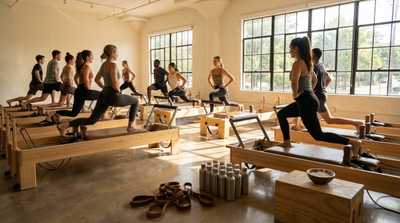
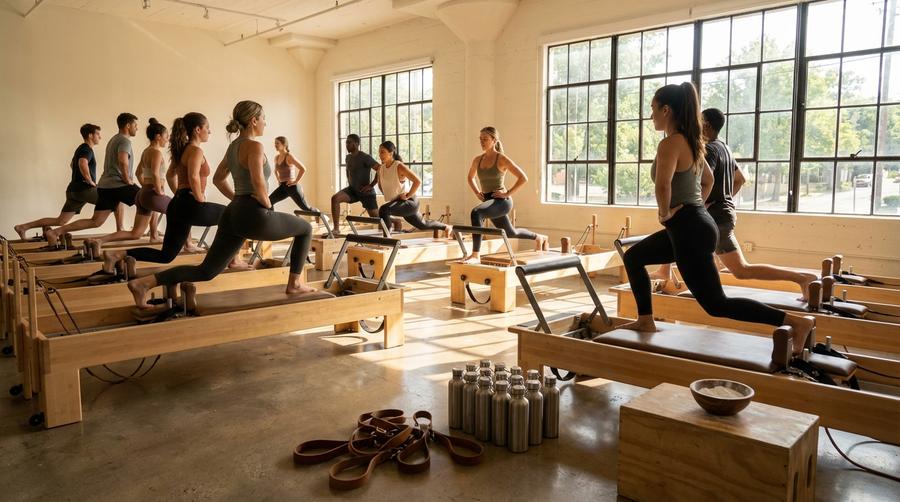
The numbers don’t lie: Pilates is the dominant fitness trend heading into 2026, and it shows no signs of slowing. Every week, new studios open. Existing gyms are adding Pilates equipment. Waiting lists are the norm for reformer classes in major cities.
But growth creates its own problems. Studios that could once survive on personality and word-of-mouth are finding out the hard way that scaling is a different game entirely.
When the Instructor Is the Product
Most Pilates studios are built around a handful of exceptional instructors. Members book classes specifically to train with Sarah, or Marcus, or whoever delivers that particular magic. That’s a real competitive advantage. At least, until Sarah calls in sick, or Marcus moves interstate, or you open a second location and realize you can’t clone your best people.
This is the quiet pressure that’s building across the Pilates boom right now. Demand is high. Studio capacity is growing. But the experience members actually pay for is inconsistent by design.
A reformer Pilates class should hit specific cues, in a specific order, with specific timing. The warmup matters. The transitions matter. The cool-down is part of the workout, not an afterthought. When that structure varies class to class, members feel it even if they can’t name it.
What Boutique Members Are Paying For
The price gap between boutique Pilates and a big-box gym isn’t a mystery. Members who pay $35-50 per class are buying more than equipment access. They’re buying a curated, choreographed experience. They expect it to be the same caliber whether they come on Tuesday morning or Sunday evening, whether their usual instructor is teaching or a sub fills in.
Studios that deliver on that expectation consistently build loyal, high-retention memberships. Studios that don’t are seeing churn that doesn’t show up in the marketing data. It shows up when members quietly cancel without complaint.
The Tech Gap in Pilates
The fitness tech industry has invested heavily in booking systems and member apps. Those are table stakes now. But the actual delivery of the class on the floor has been largely left to paper notes, printed cards, and instructor memory.
That’s changing. Studios are beginning to treat workout delivery as an operational system, not a creative improvisation. Displaying structured class progressions on studio screens, keeping timing consistent, giving subs the same framework that the regular instructor uses. These aren’t luxuries. They’re what you need when you’re running six classes a day across two locations.
The Pilates studios that are growing sustainably in 2026 aren’t just good at marketing or beautiful on Instagram. They’ve figured out how to make the experience repeatable.
The Sub Problem
Ask any studio manager what keeps them up at night and substitutes will come up within the first two minutes. It’s not just about finding someone qualified. It’s about ensuring that the member who shows up for their Tuesday noon class gets the same experience they always get, regardless of who’s teaching.
When instructors have to reverse-engineer what the regular teacher does from memory or scattered notes, the class drifts. When they have a structured framework displayed in front of them, including the flow, the timing, and the cues, they can deliver something consistent without having to improvise from scratch.
This is the operational problem that Pilates studios haven’t fully solved yet. But it’s exactly the kind of problem that’s straightforward to fix once you recognize it as a system issue, not a people issue.
The Studios That Will Win
The Pilates market is big enough right now that mediocre studios can fill classes. But that window closes as competition intensifies and members get more selective. The studios that build loyalty in this expansion phase will be the ones that:
- Treat class delivery as a repeatable system, not a one-off performance
- Give instructors the tools to stay on track without memorizing everything
- Make the substitute experience indistinguishable from the regular one
- Use technology on the floor, not just in the front office
The booking system is solved. The member app is solved. The next competitive frontier for Pilates studios is the class itself. Making it consistent, scalable, and great every single time. That’s where the real differentiation happens now.
Related reading: The Workout Isn’t the Product. The Instruction Is. | The Hidden Cost of Verbal-Only Instruction | How to Evaluate Your Coaches | Your Class Is Only as Good as Your Warmup