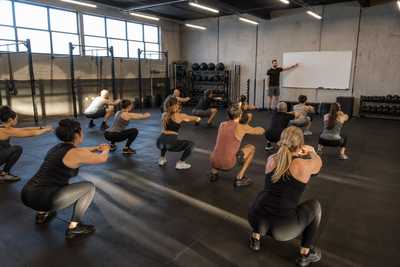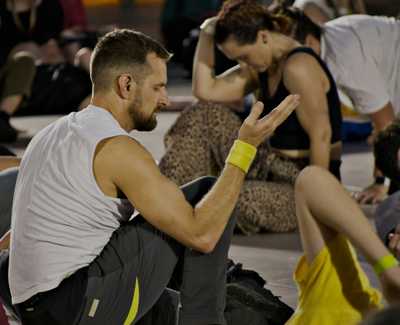
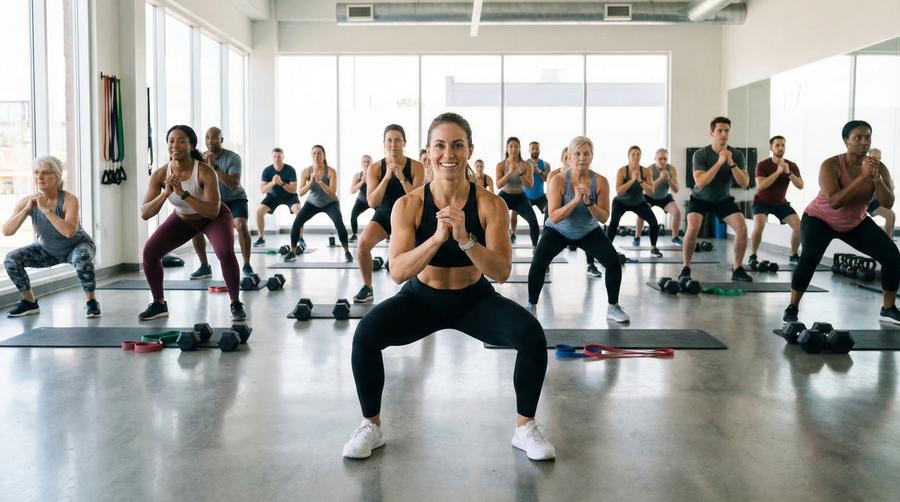
Your trainers are probably good at talking. They call out the next movement, cue the rep count, remind people to breathe. What they may not be doing is demonstrating, and if they’re not, a chunk of every class is moving on instinct rather than instruction.
That gap is worth closing before you launch another class format. A member should be able to understand the task without copying an equally confused neighbor.
How Members Learn in a Group Class
An exercise name means little to someone who hasn’t done it before. A demonstration shows the setup and movement path. A short cue draws attention to a detail. Watching the member try it tells you whether the explanation worked.
This is about the task, not assigning people fixed visual, auditory, or kinesthetic types. Pashler and colleagues’ review found insufficient evidence for matching teaching to those learning-style labels.
Use the combination that helps the person in front of you. Check sightlines, keep words clear, and offer another explanation if someone can’t see or follow the demonstration.
What Verbal-Only Actually Costs
Watch for the extra work confusion creates. Members start late, look at the person next to them, or stop the coach to ask what the exercise was meant to be. The class loses time and the coach has to repeat an explanation that could have been clearer from the start.
There is a confidence cost too. Ask a new member whether they knew what to do and whether they could get help. If they finish unsure, that is useful feedback about the session—not something to dismiss because everyone completed the timer.
Don’t wait for a cancellation form to name the problem. Observe the confusion while there is still a class to improve.
Why Trainers Default to Verbal-Only
Demonstration takes energy and timing. A trainer who’s running back-to-back classes, or who is fatigued mid-week, defaults to calling movements from the side of the room. It’s physically easier, and it still feels like instruction because the words are all there.
There’s also a coaching habit issue. Many trainers were never specifically taught to prioritize visual demonstration for complex or unfamiliar movements. If their own training was verbal-heavy, that’s what they replicate.
And in some class formats, the trainer is expected to work out with the class, which sounds great for energy and connection, but can make it hard to cue clearly and demonstrate with precision at the same time. If your trainers are deep into the workout themselves, their attention is split.
None of these are character flaws. They’re system gaps that your operation should address.
What a Multi-Modal Instruction Standard Looks Like
You don’t need trainers to do a five-minute lecture before every exercise. You need a clear standard for when demonstration is required and what it should cover.
New movements always get a demo. If an exercise is appearing in the program for the first time, or isn’t a basic movement pattern, trainers should demonstrate it before the set starts. This can be done during the transition from the previous exercise. A brief visual reference can save a longer interruption once the set is underway. Give members an easy first attempt and watch it before increasing the demand.
Complex movements get a setup check every session. For technical barbell work, carries, and plyometrics, show the relevant positions and an appropriate starting option. Keep a familiar demonstration brief; spend more time where the movement, equipment, or participant needs it. Fatigue, distractions, and long gaps between sessions mean members forget details. The demonstration is the reset.
The demo should show what right looks like, not what the trainer can do. Common trainer mistake: demonstrating at full load, full speed, in a way that looks impressive but is impossible for a member to pattern-match against. The useful demo is at moderate pace, in the member’s likely movement range, showing the key positions the cue refers to. “Hinge back until your shins are vertical” lands differently when the trainer shows it than when they just say it.
Verbal cues should reference the demo. Once a movement is demonstrated, subsequent verbal cues should connect back to it: “Like I showed you, keep the elbows tracking forward.” This links what members saw to what they’re doing, reinforcing the reference rather than replacing it.
A Practical Test You Can Run This Week
Pick one class in your schedule. Watch the full session with a specific question in mind: for every exercise in this class, would a brand-new member know what to do based on the instruction provided?
Not a person who’s been coming for six months. A brand-new member.
If the answer for multiple movements is “probably not,” you’ve identified a delivery gap. Check whether the trainer understands the expected standard and can demonstrate the movement clearly.
The fix is straightforward: a short one-on-one debrief, a clear expectation of when demos are required, and a follow-up observation within two weeks to confirm the change.
Start with one specific ask and a follow-up. If the coach lacks the movement knowledge to carry it out, arrange training or supervised practice.
Linking Instruction Quality to the Data You Already Have
If you want to test the hypothesis in your own gym before making any changes, pull two data points: average class return rate (do members who attend a class return within seven days?) and which trainers have the highest and lowest rates.
Then watch one class each from your top and bottom performers. Don’t go in looking at energy or enthusiasm. Watch specifically for the presence or absence of demonstration: when it happens, what it covers, and whether verbal cues connect back to what was shown.
Compare similar formats and time slots before drawing a conclusion. Return attendance gives you a lead to investigate; watching the class and speaking to members tells you whether demonstration is part of the explanation.
If you’ve already built out a coach observation process, the coach evaluation framework covers how to structure those sessions and what to do with the results. Multi-modal instruction delivery is worth adding as a specific line item in any rubric you’re using. And if you want the bigger-picture case for why instruction quality is the core product — not the format or the programming — The Workout Isn’t the Product. The Instruction Is. makes that argument directly. Worth noting: the standard for coaching quality matters even more when class size is small. In a room of 6 or 8 people, a verbal-only coach is immediately visible to every member in a way that isn’t true at 25 people.
The Takeaway
Your members can’t read your trainers’ mental cueing library. What they can do is watch, listen, and attempt. When the instruction gives them all three reference points, they leave feeling capable. When it only gives them one, some of them leave feeling unsure, and that uncertainty deserves attention.
This isn’t about making your trainers work harder. It’s about giving them a clear expectation: when a new or complex movement is on the program, show it. Not perfectly. Not elaborately. Just show it.
That’s a standard you can communicate in ten minutes and follow up on inside a week.
Related: The Workout Isn’t the Product. The Instruction Is. | How to Evaluate Your Coaches | Your Class Is Only as Good as Your Warmup | How to Coach a Mixed-Ability Class Without Losing Anyone